THE NAME THAT’S FELT ALIVE SO FAR…
[Soffit Pamphlet Series No. 3]
by Ryan Greene
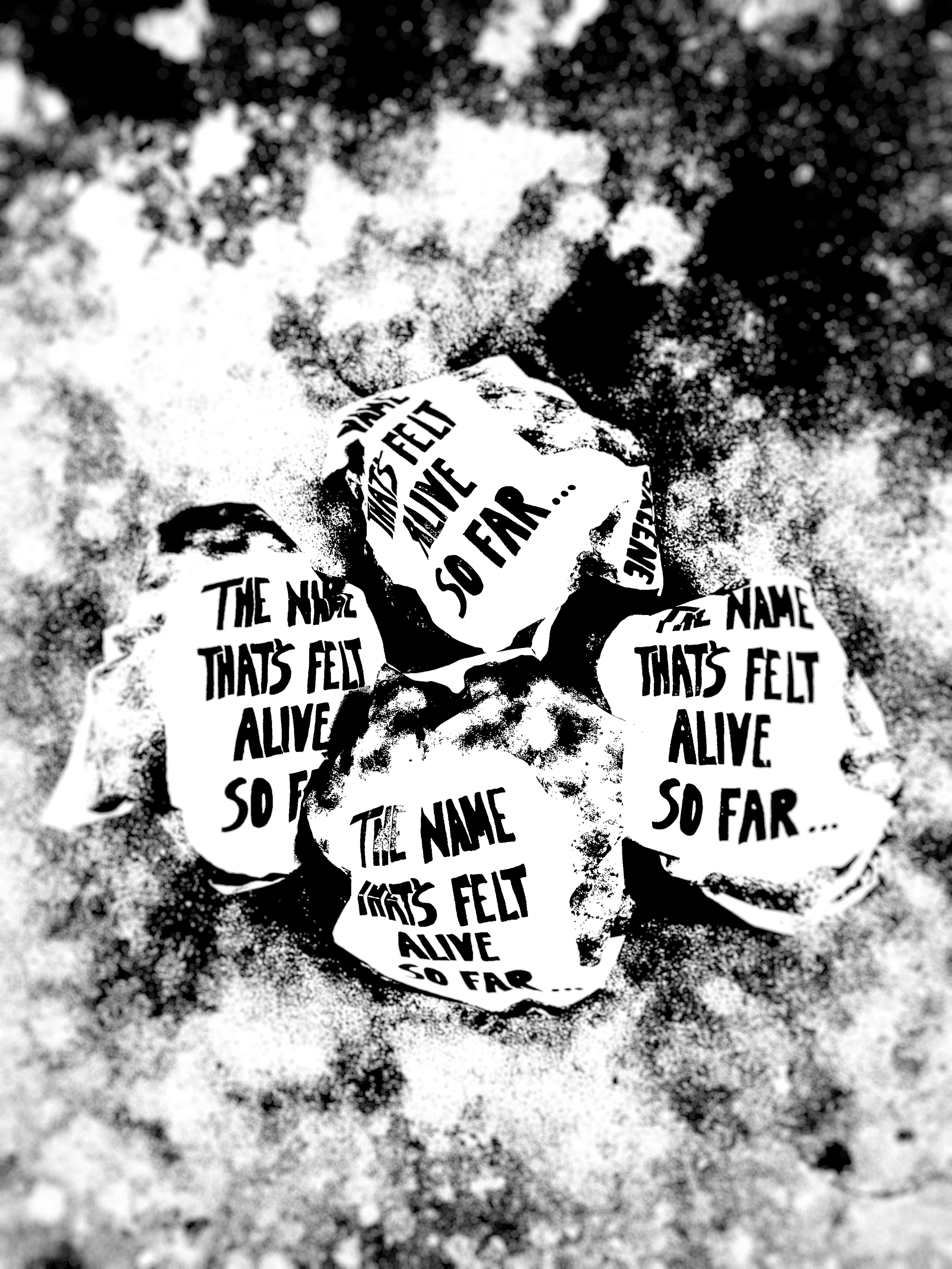
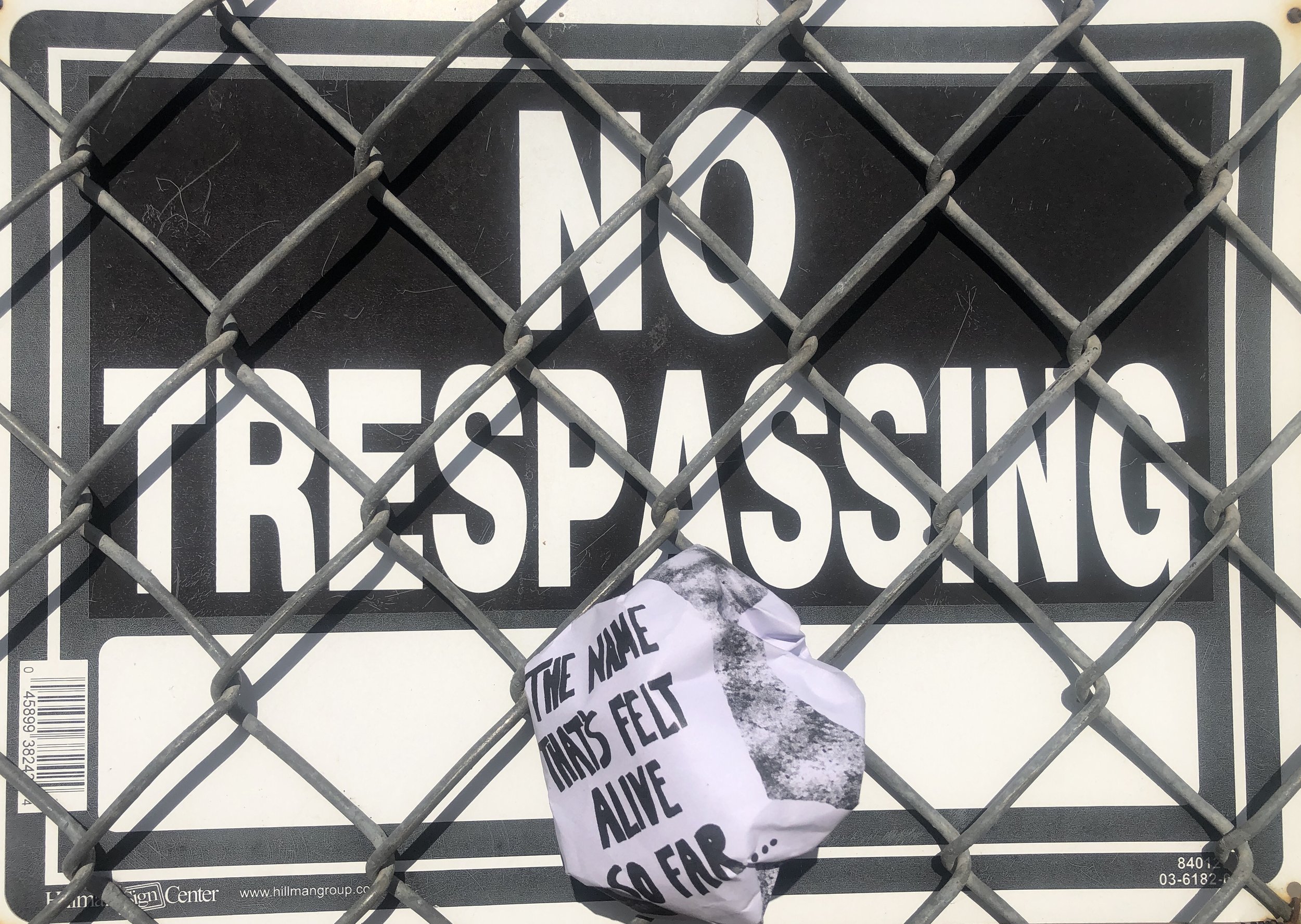
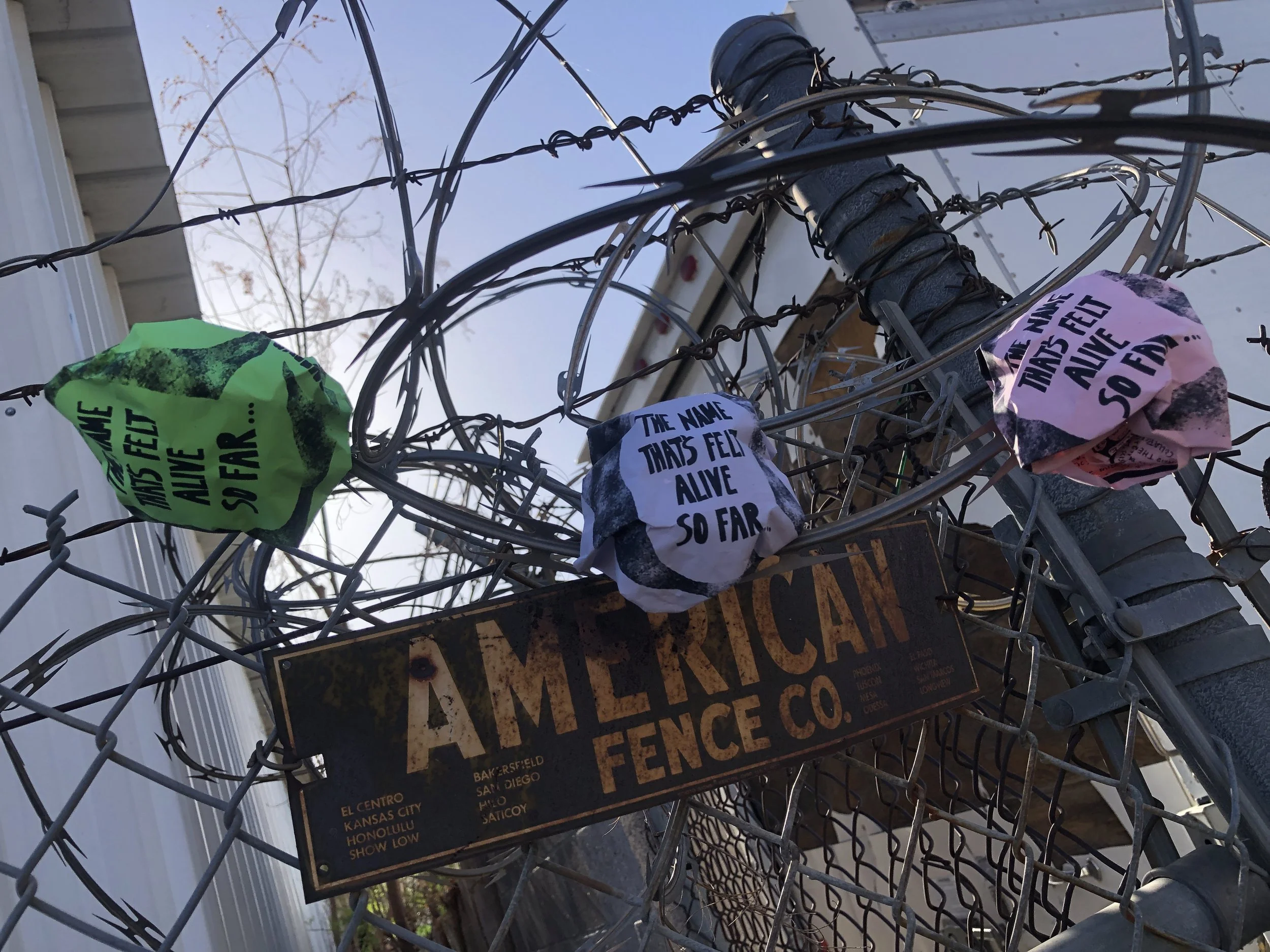
Hey there — it’s me, Ryan. Welcome to the webpage for “THE NAME THAT’S FELT ALIVE SO FAR…” — I’m so glad this strange little Soffit found you, wherever and whenever you are. I love the physical form of this crumpled up pamphlet, and I’m grateful to Cameron for proposing this way of circulating the text — is it an old receipt in the bottom of your bag, a cast-off poem draft mid-air on its way to the recycling bin, a secret note hurled across a classroom? Once it’s in your care, will you re-crumple it after reading, attempt to flatten it out, or find some other way to store/share/dispose of it? Whatever you do with the paper in your hands, I hope you take a moment to enjoy the digital accompaniments gathered here on the web.
You can listen to an audio recording of the text, access the files if you’d like to print your own copy at home, and check out the full animation whose 75 frames are scattered, one by one, across the many paper copies of this Soffit. Finally, you can take a look at some transfluxions I’ve made in the past to see what the fuss is all about.
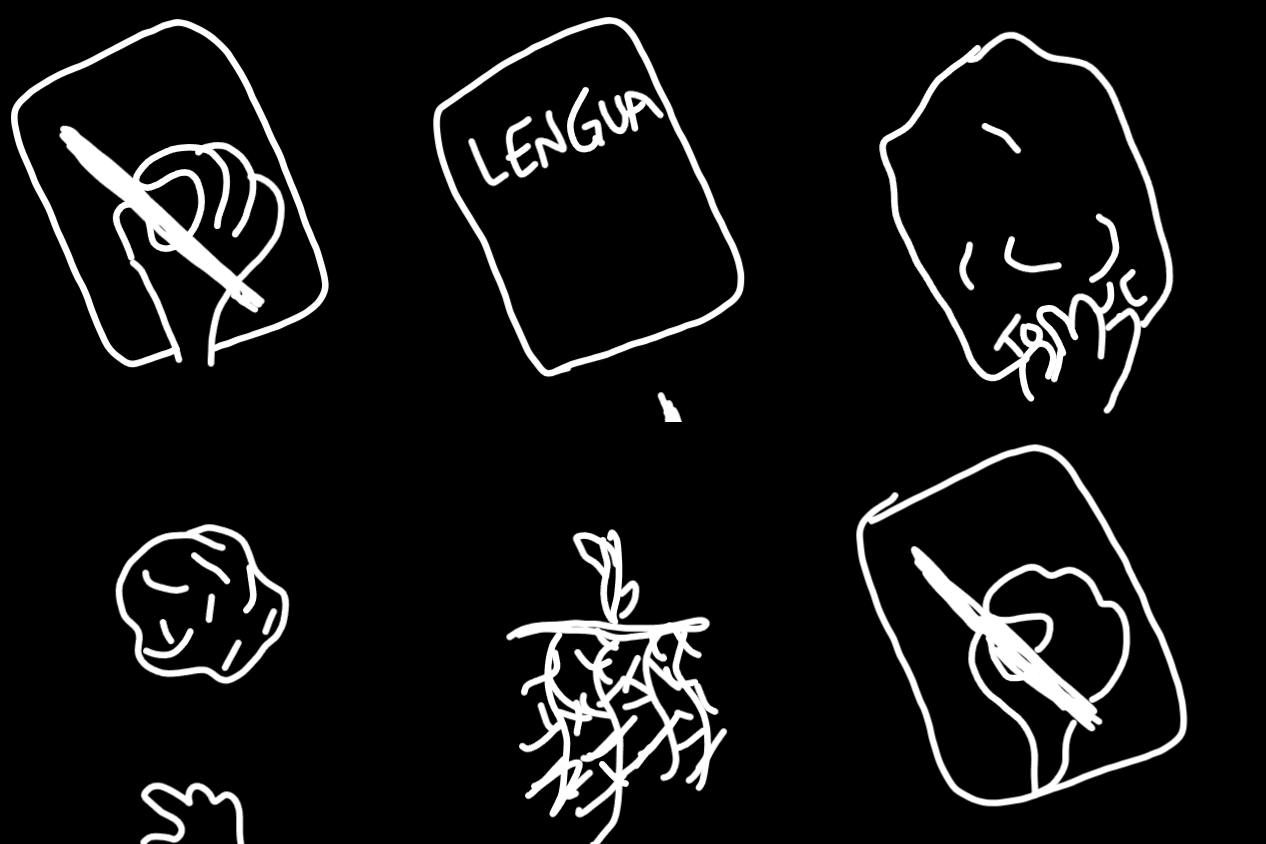
DOWNLOAD THE FULL TEXT HERE
Optional: choose any one of the 75 pages in
the PDF below to print onto the front, top-right
corner of the Full Text yr own “translanimation”
BONUS “TRANSLANIMATION”
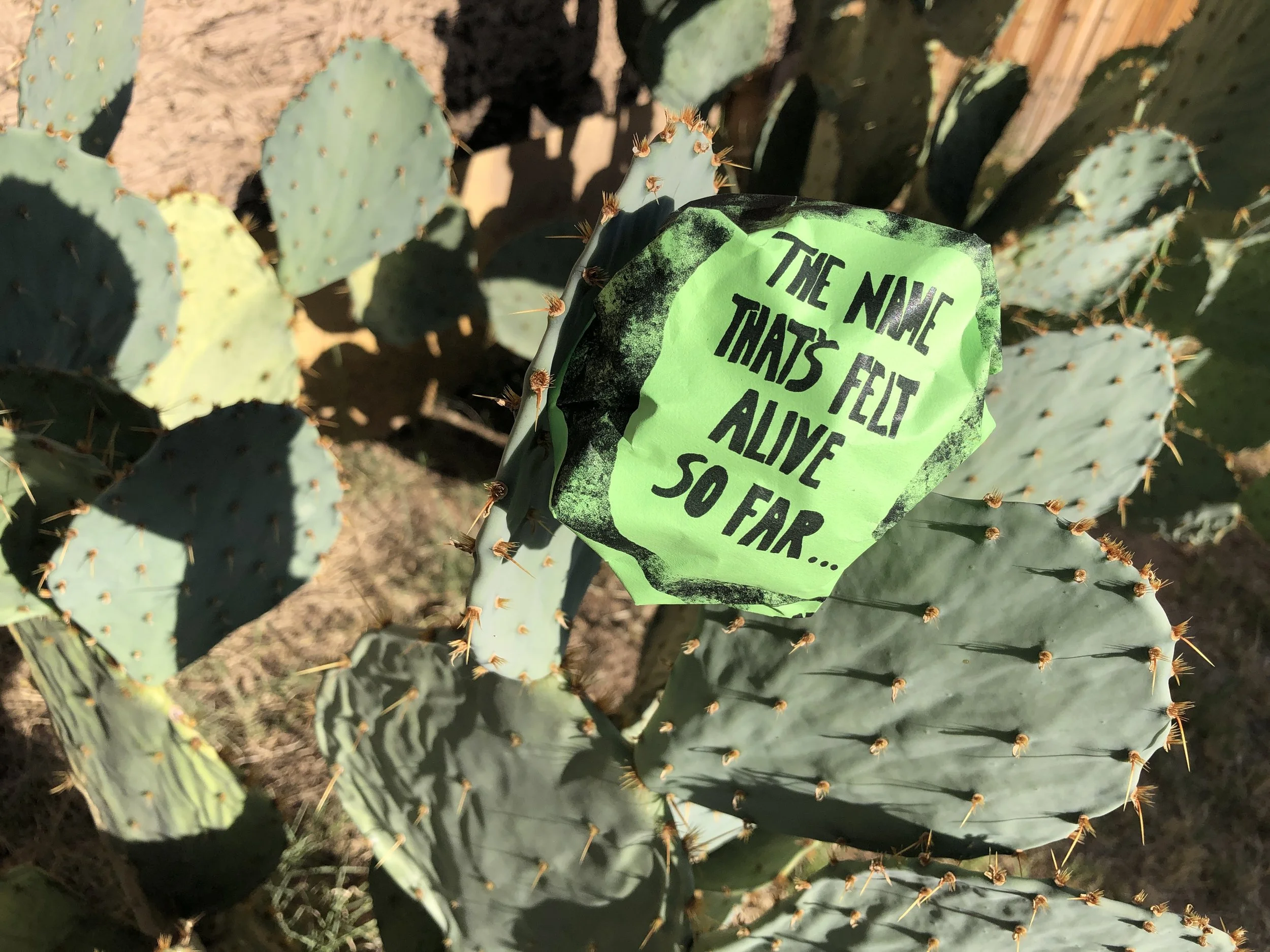
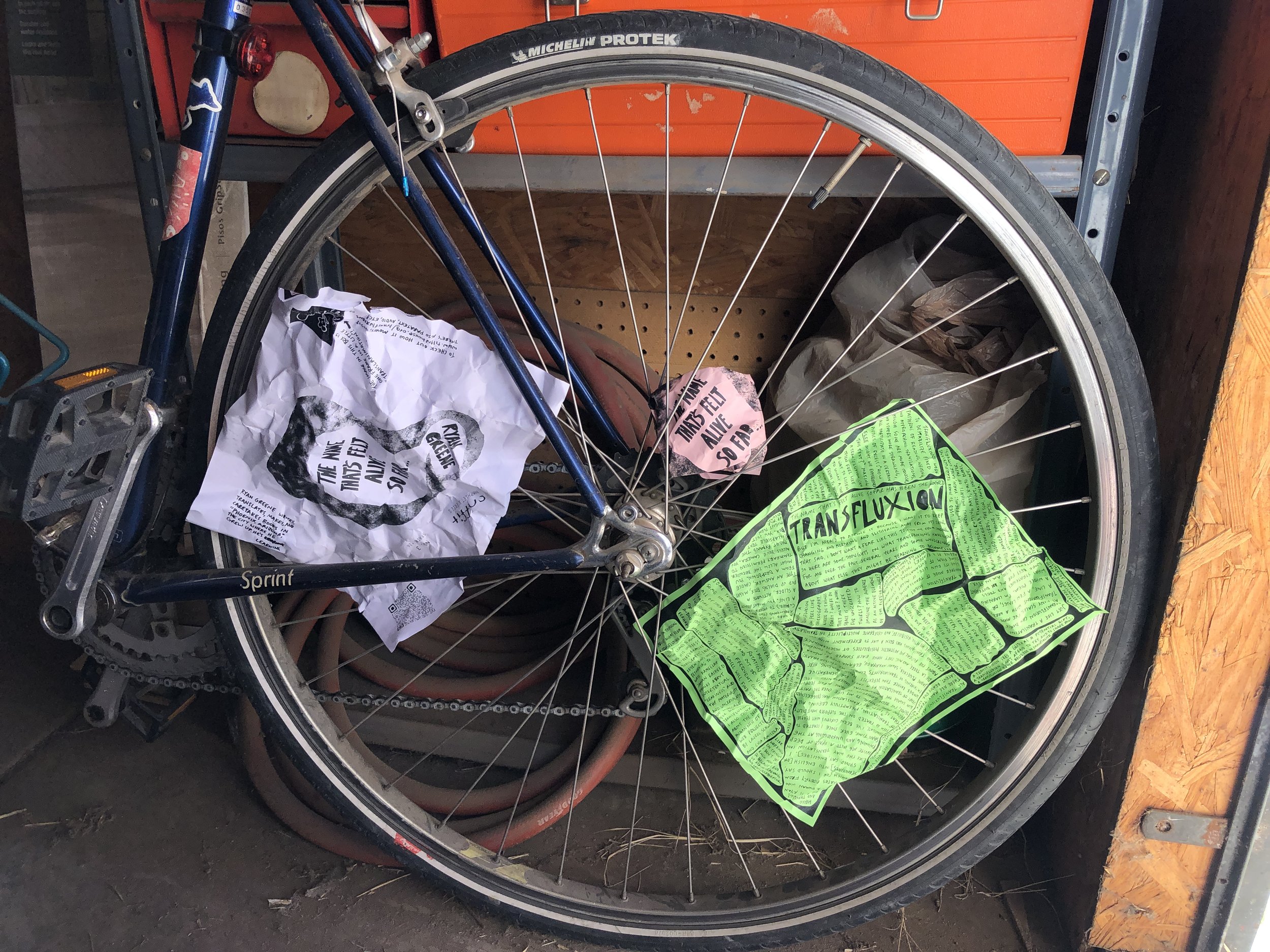
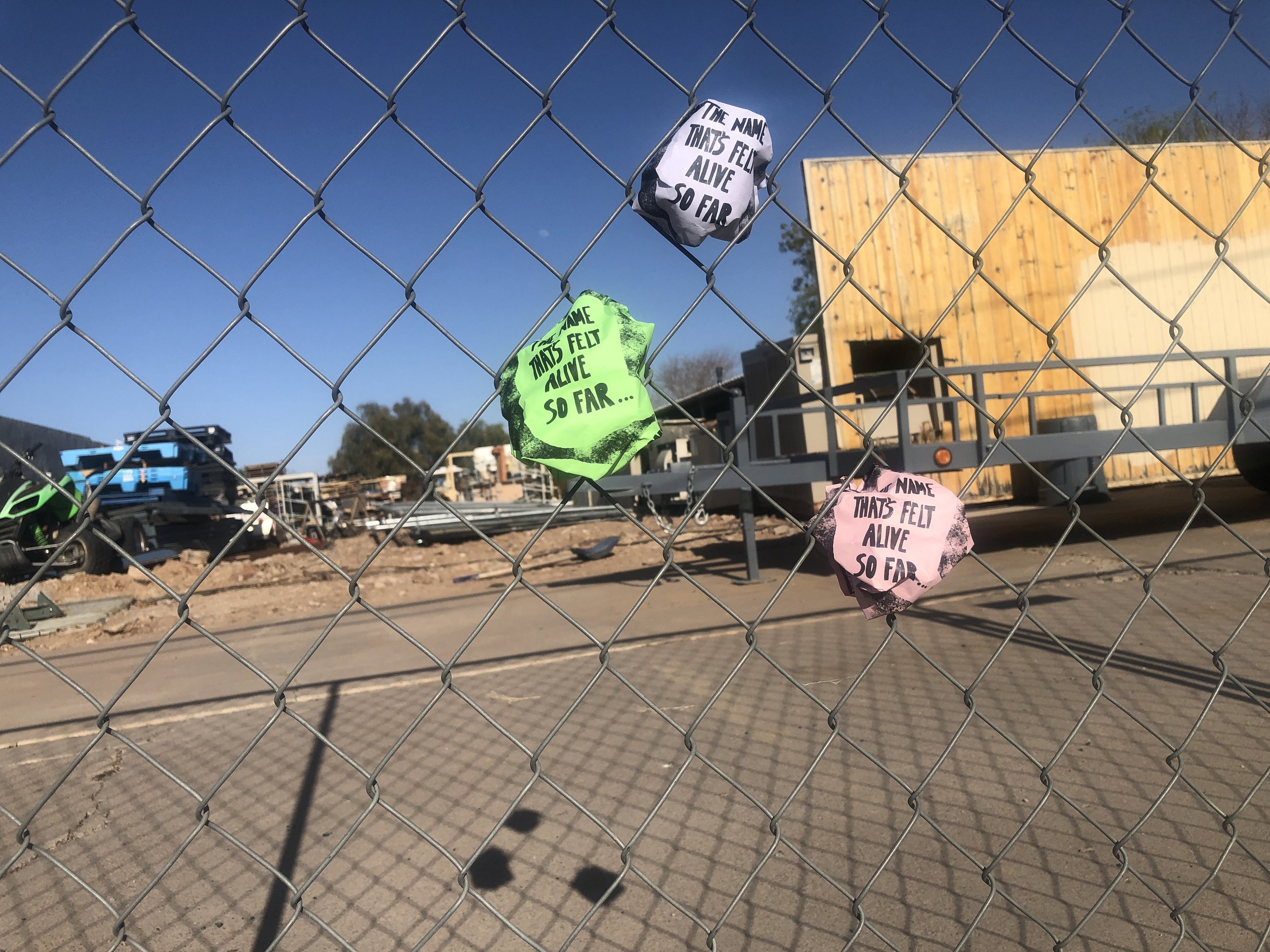
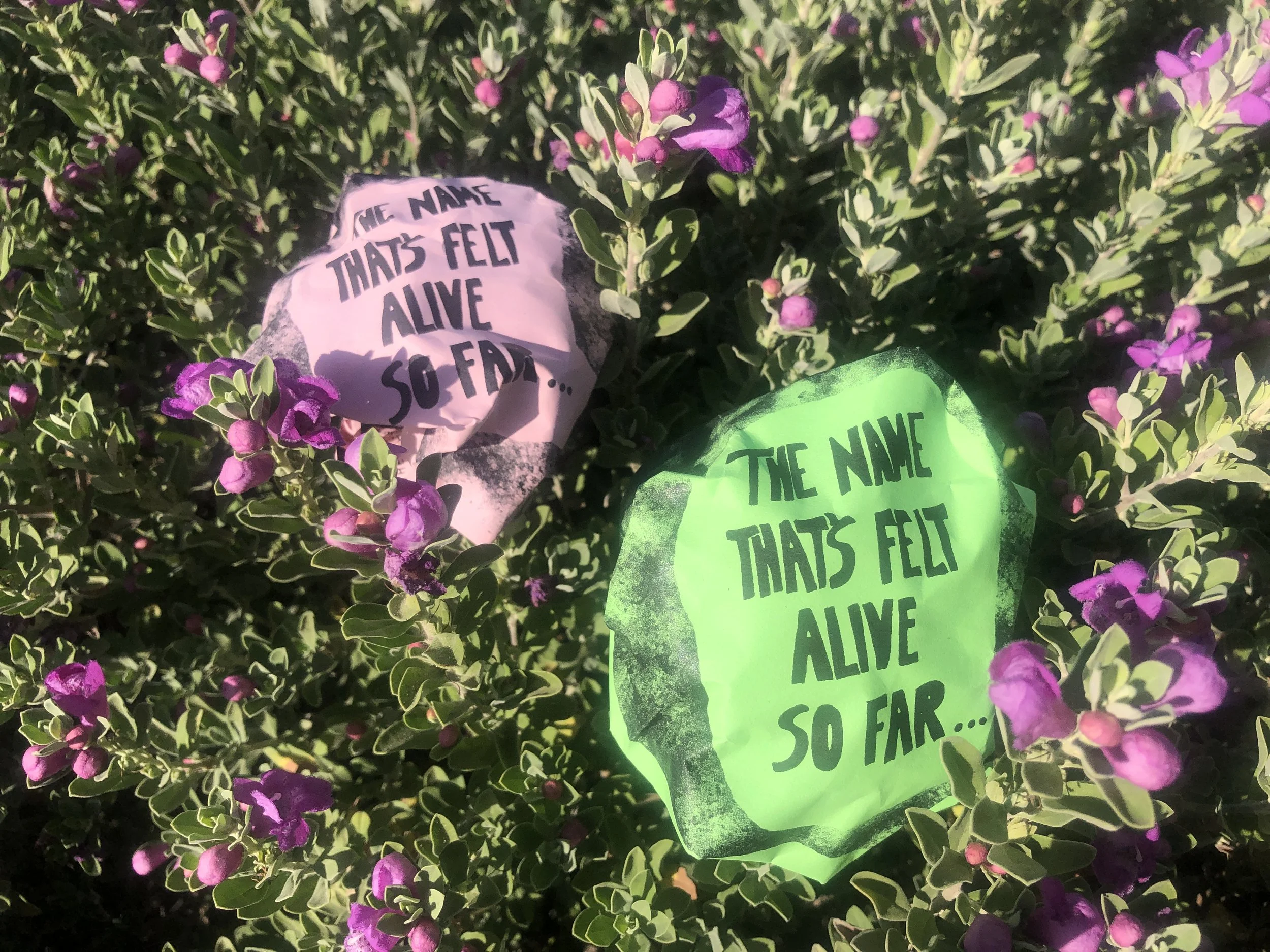
If you decide to print a copy of your own, feel free to send us a picture — we’ll be compiling and sharing some photos of Soffits in the wild below.
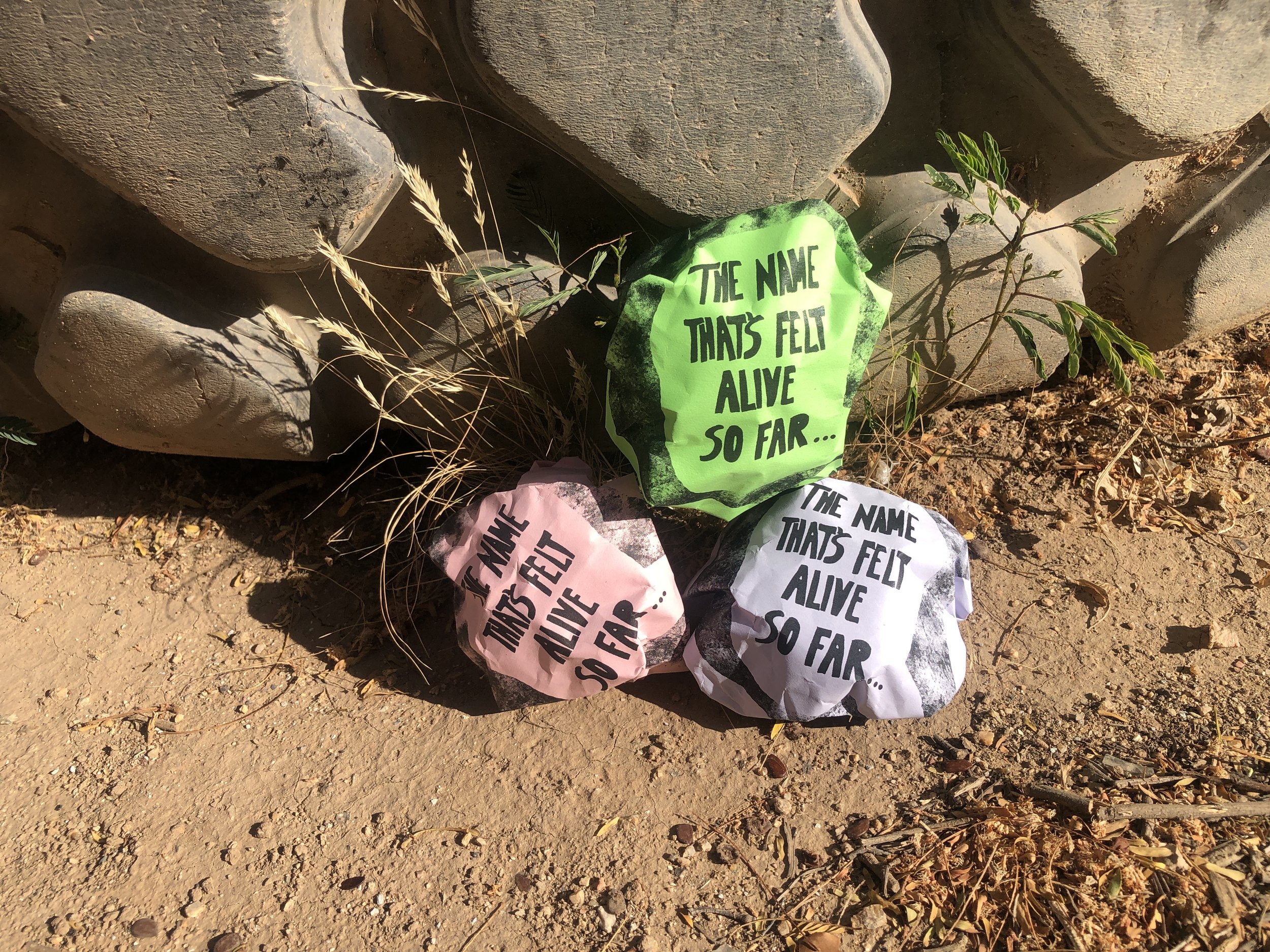
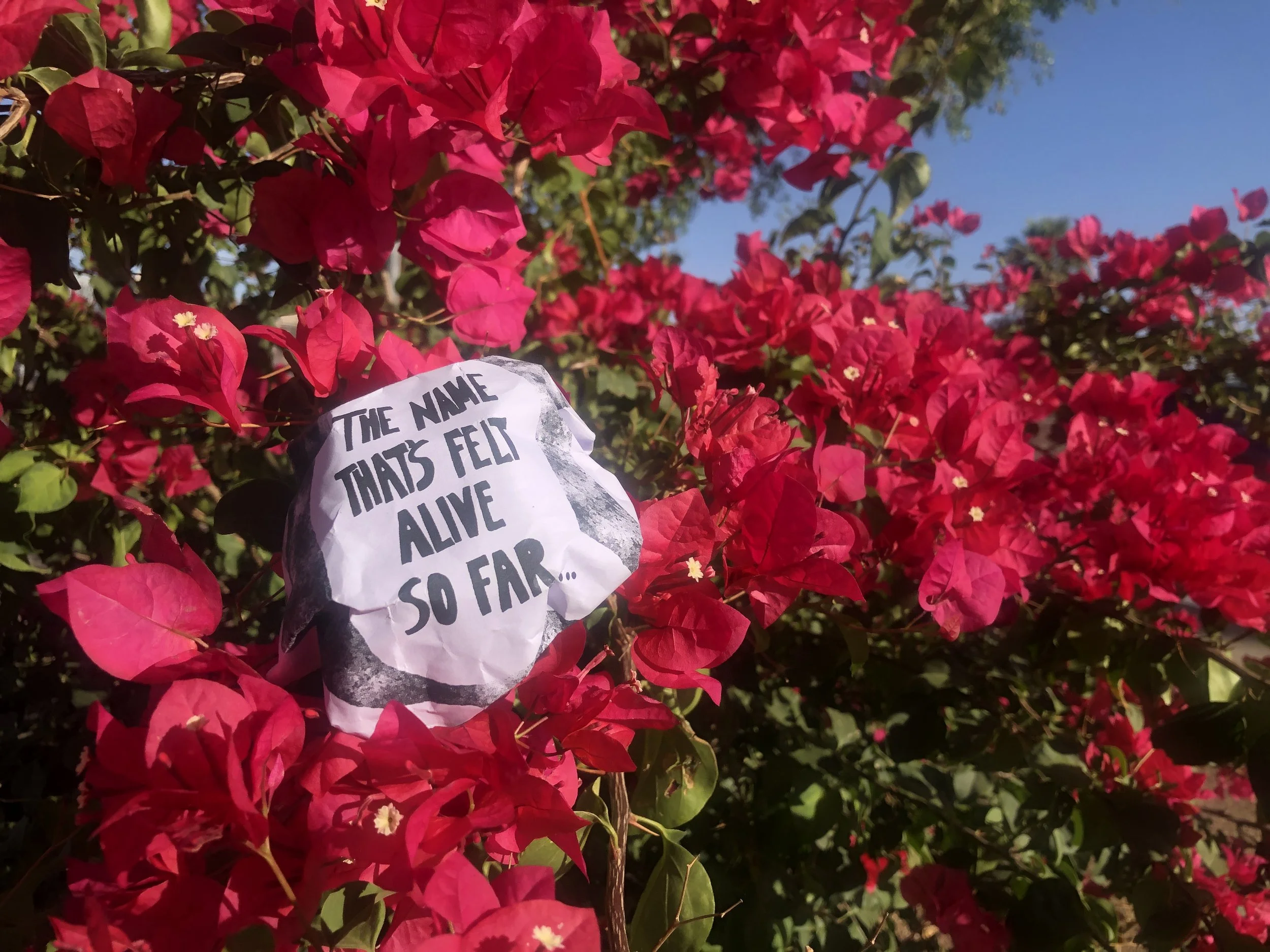
. . .
Exemplary Transfluxions
Transfluxions in Action
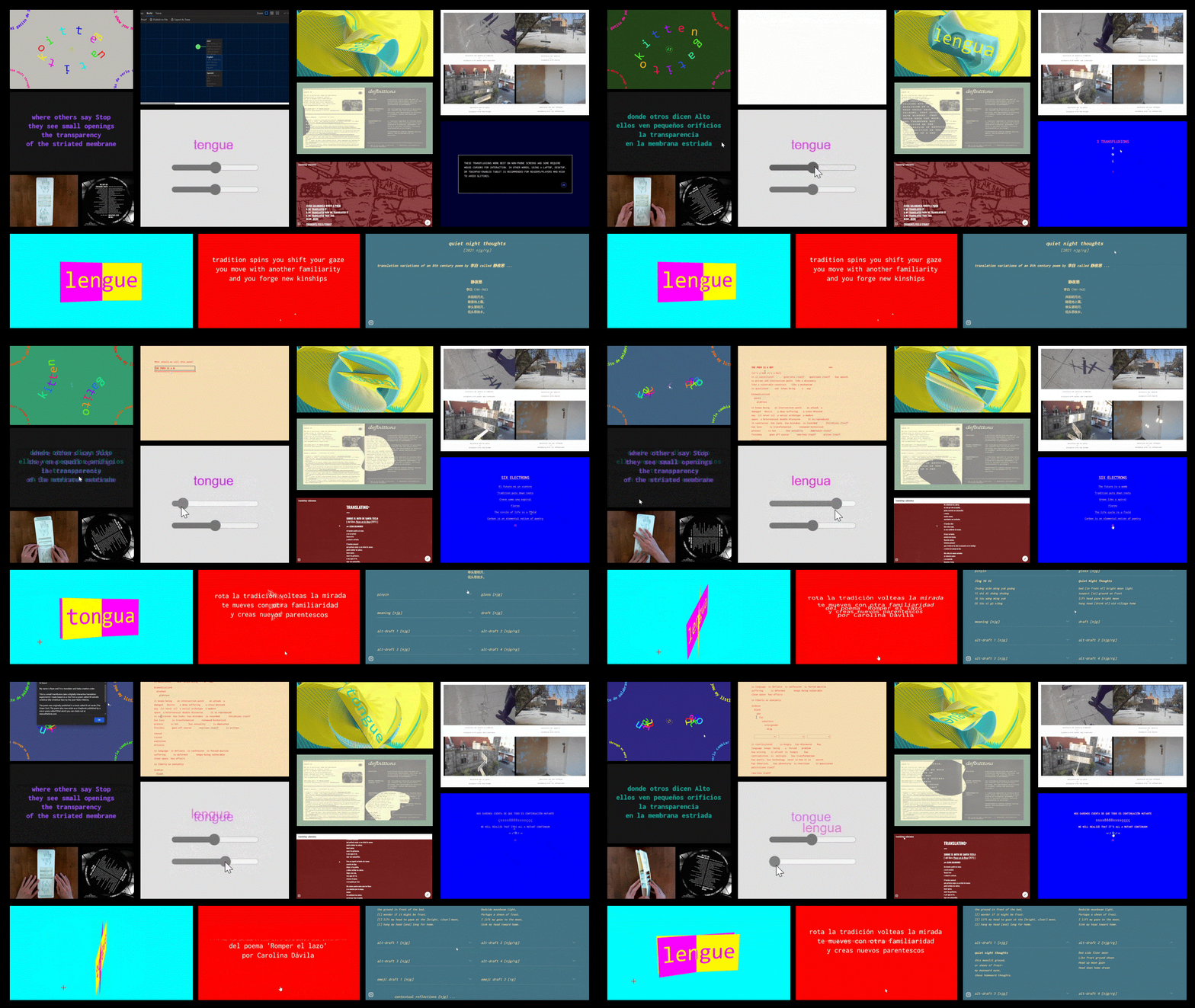
The compilation above gathers a few transfluxions I’ve made over the past several years. Some experiment with the interplay of single words (often “tongue” and “lengua,” which refer to both the physical muscle in our mouth and the broader notion of a language, like a “mother tongue”). Others focus on selected verses from longer poems. Still others explore how to present full poems and their accompanying paratext.
Whether physical or digital (which is another mode of physicality), all of these transfluxions are interested in motion, interaction, and spatial relationships. Importantly, each celebrate indeterminacy as a generative gift rather than a stain to be scrubbed from translation.
Below I’ve highlighted a few selected transfluxions. If you’re interested in learning more and/or being in conversation about these types of experiments, feel free to write to me at ryanhgreene1 at gmail. Also, I want to express my deep gratitude to the friends and collaborators who have helped to shape these transfluxions both directly and indirectly, especially Yaxkin Melchy, Carolina Dávila, Claudina Domingo, Ana Belén López, Elena Salamanca, Leah Arambula Terry, Will Fesperman, kathy wu, Noa Micaela Fields, Nicole Cecilia Delgado, maryhope|whitehead|lee, Claudia Nuñez de Ibieta, Angie Dell, and Niel Gan, among others.
Lingering Glimpses
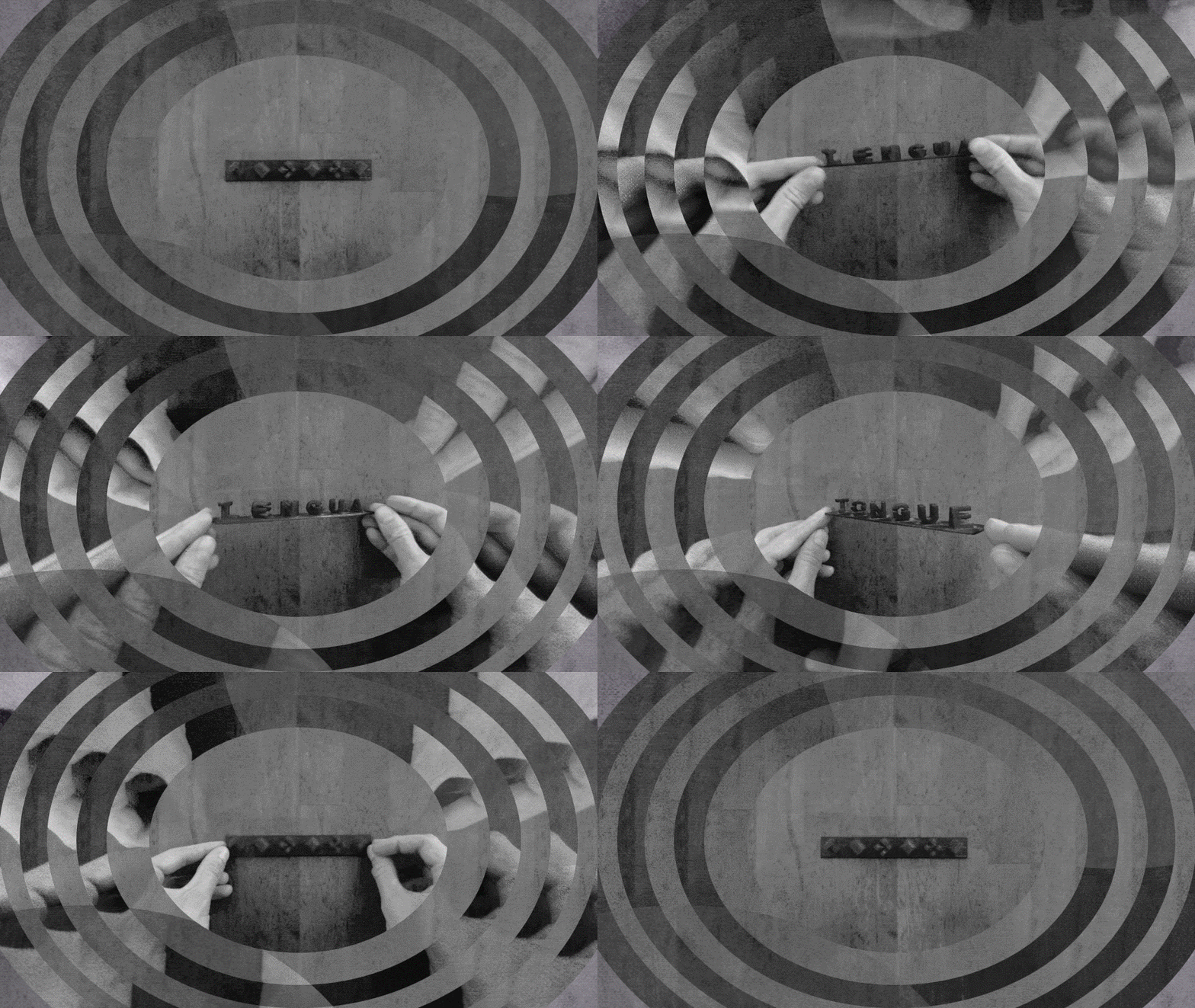
This is a small tongue-twist sculpture I designed to think about how texts might lead entangled lives, sharing a body, inseparable from one another.
. . .
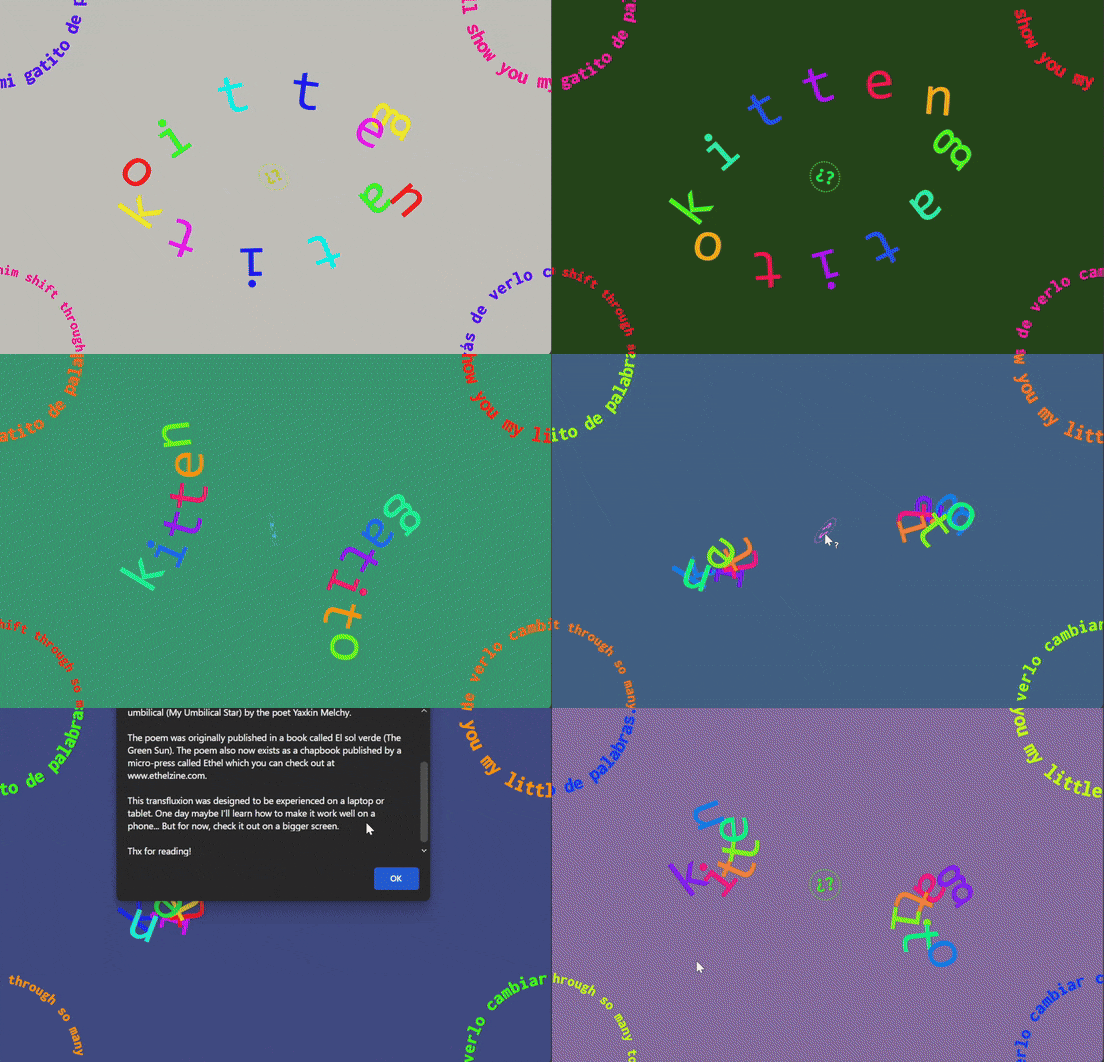
This transfluxion (link here) accompanied the chapbook, My Umbilical Star (Ethel, 2025) by Yaxkin Melchy. I coded it in p5.js. Here I was thinking about binary stars, cat eyes, rainbows, and color cues. The interactive version works best on a computer rather than a phone.
…
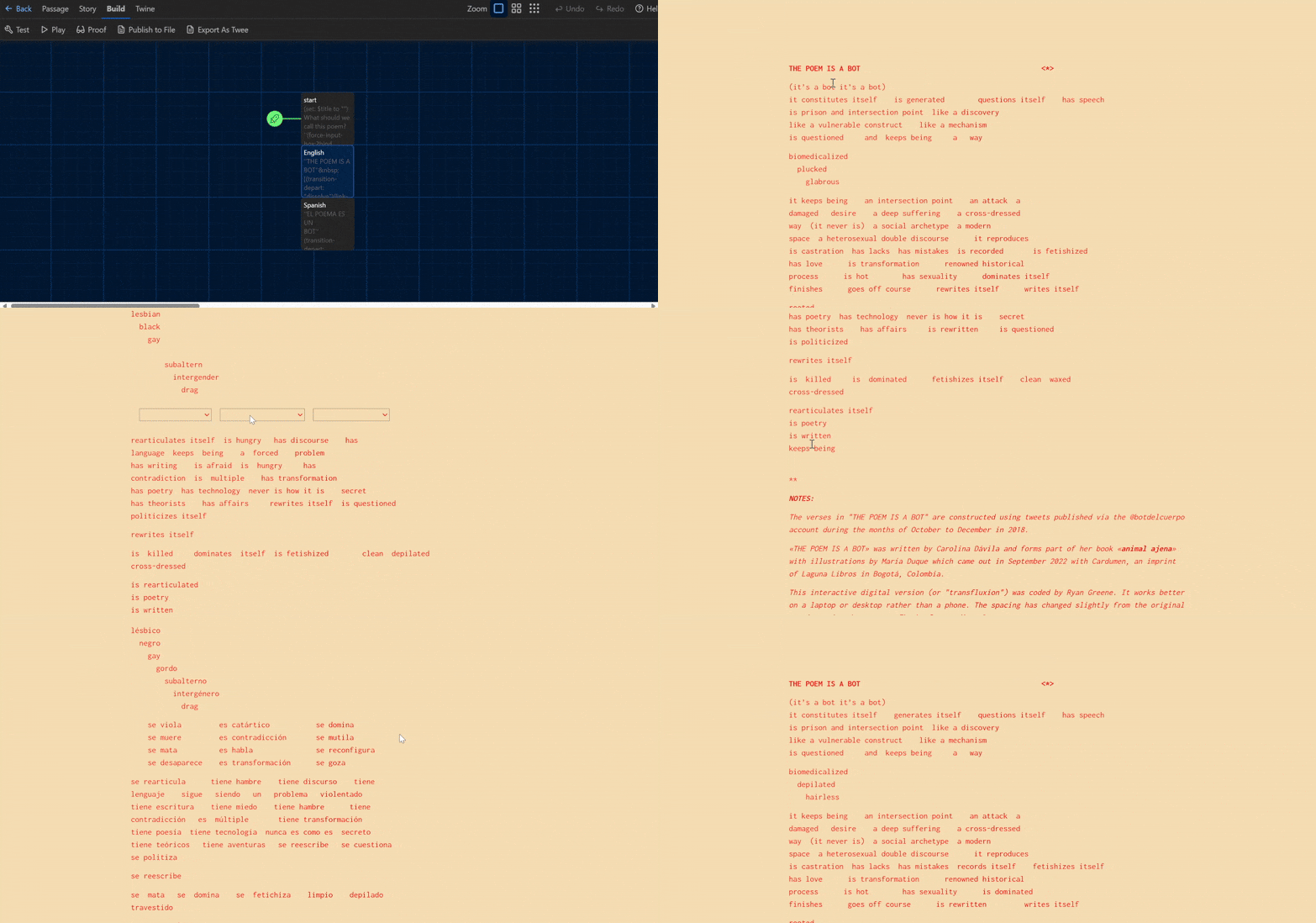
A transfluxion of “The poem is a bot” by Carolina Dávila exploring methods to give and/or destabilize agency. Built in Twine, published in the inaugural issue of Chaski Review, and available to play/read here (again, better on non-phone screens).
…
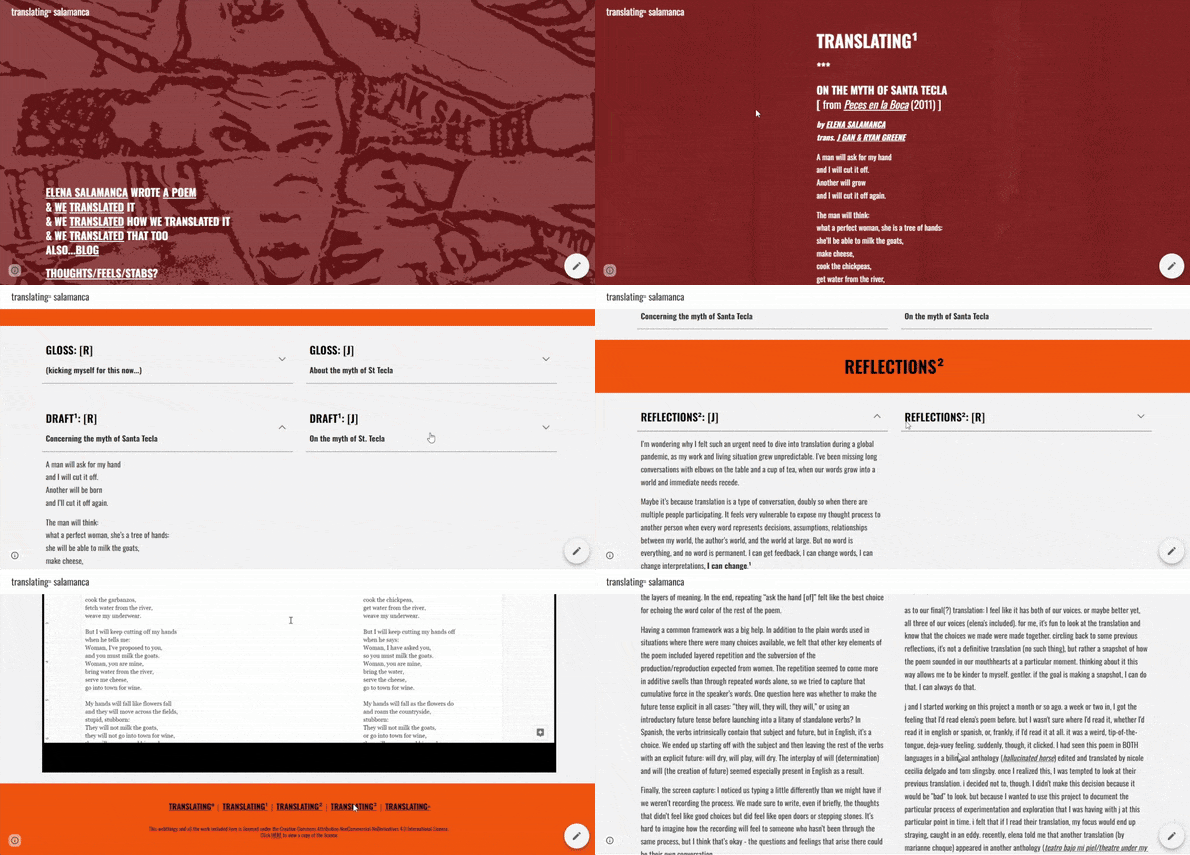
This was a collaborative transfluxion I made with my friend Niel Gan before I started using the word “transfluxion.” We created a web portal using google sites and other free digital tools to track various degrees of translation and metatranslation in our process of jointly creating an English version of the poem “The Myth of Santa Tecla” by Elena Salamanca. You can dive in here.
…
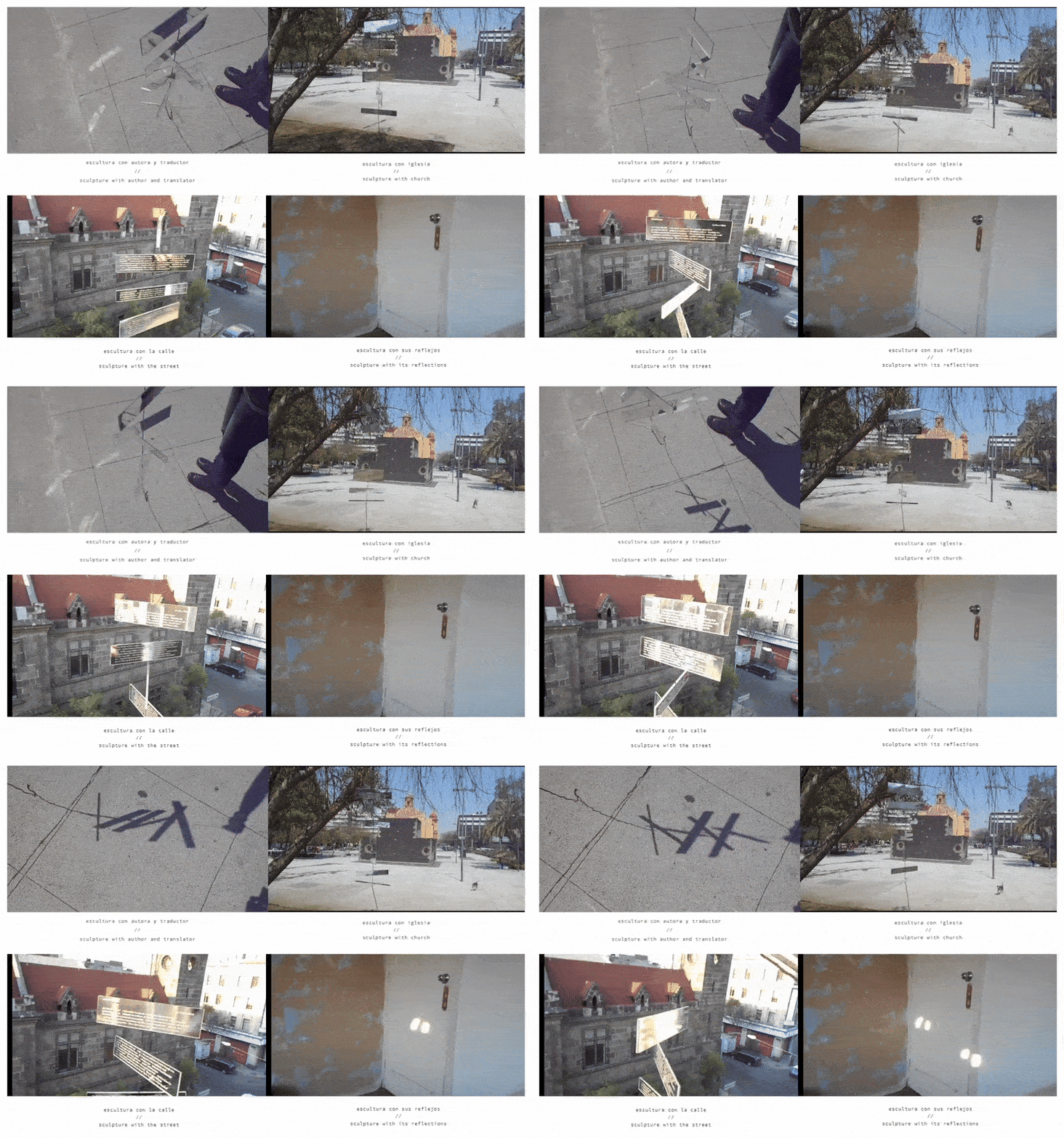
Here is a sculpture with laser-cut mirrored acrylic I made in 2016 to accompany the poem “Solitudes” from Claudina Domingo’s book Transit. Each stanza rotates freely, switching between languages and reflecting the surroundings (including the reader). I recorded these videos (link here) in 2017 when I visited Domingo in Mexico City to walk the routes of the poems. The videos were published as a bonus to the chapbook Impossible Hours (death of workers whilst building skyscrapers, 2022). The whole of Transit was published by Eulalia Books in 2024.
…
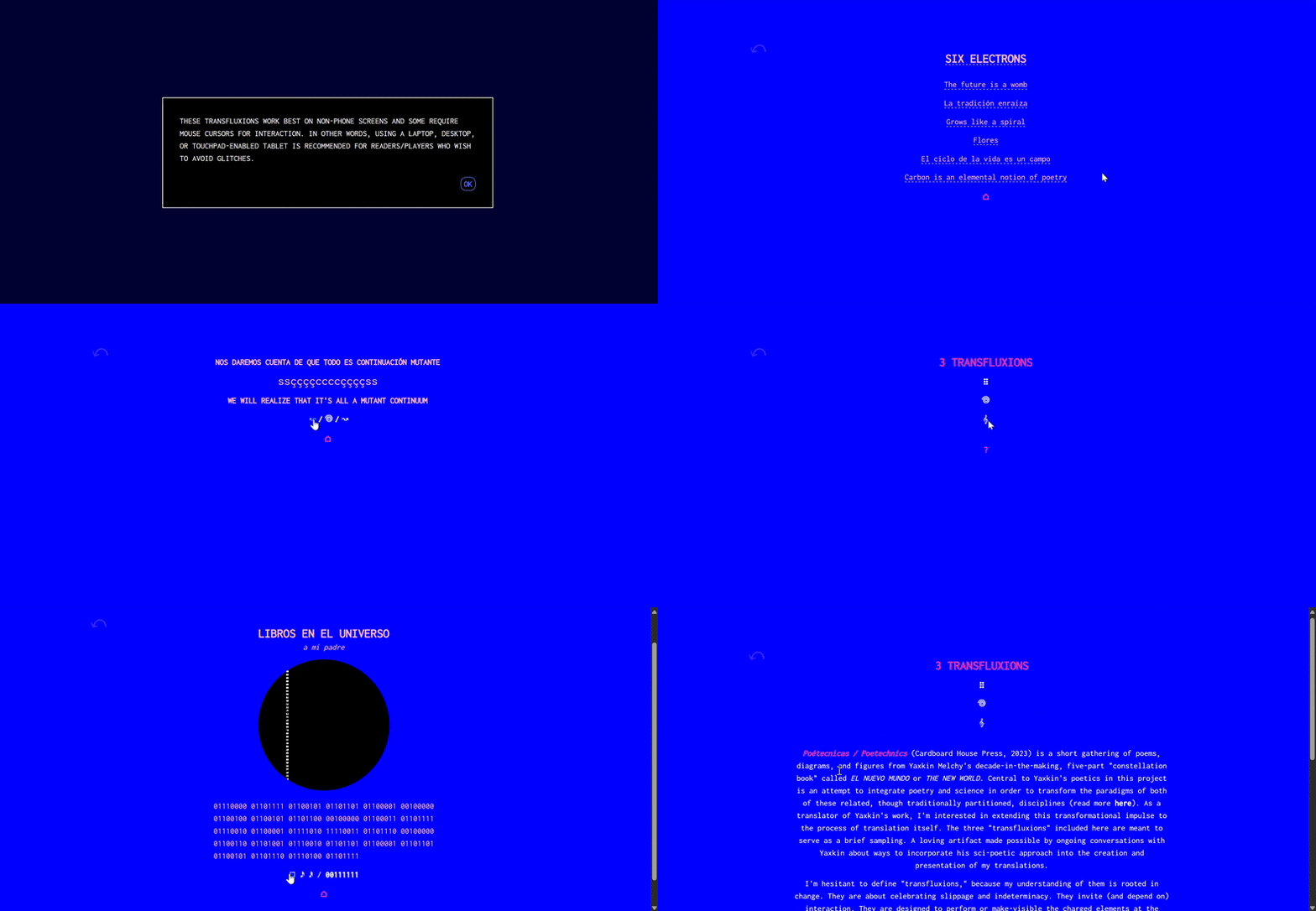
This group of three transfluxions (link here) accompanied the chapbook Poetechnics (Cardboard House Press, 2023). I coded them using Twine, a digital tool originally developed for interactive fiction. Here I was playing with language as quantum state, reading as mutation, and binary code as musical score.
…
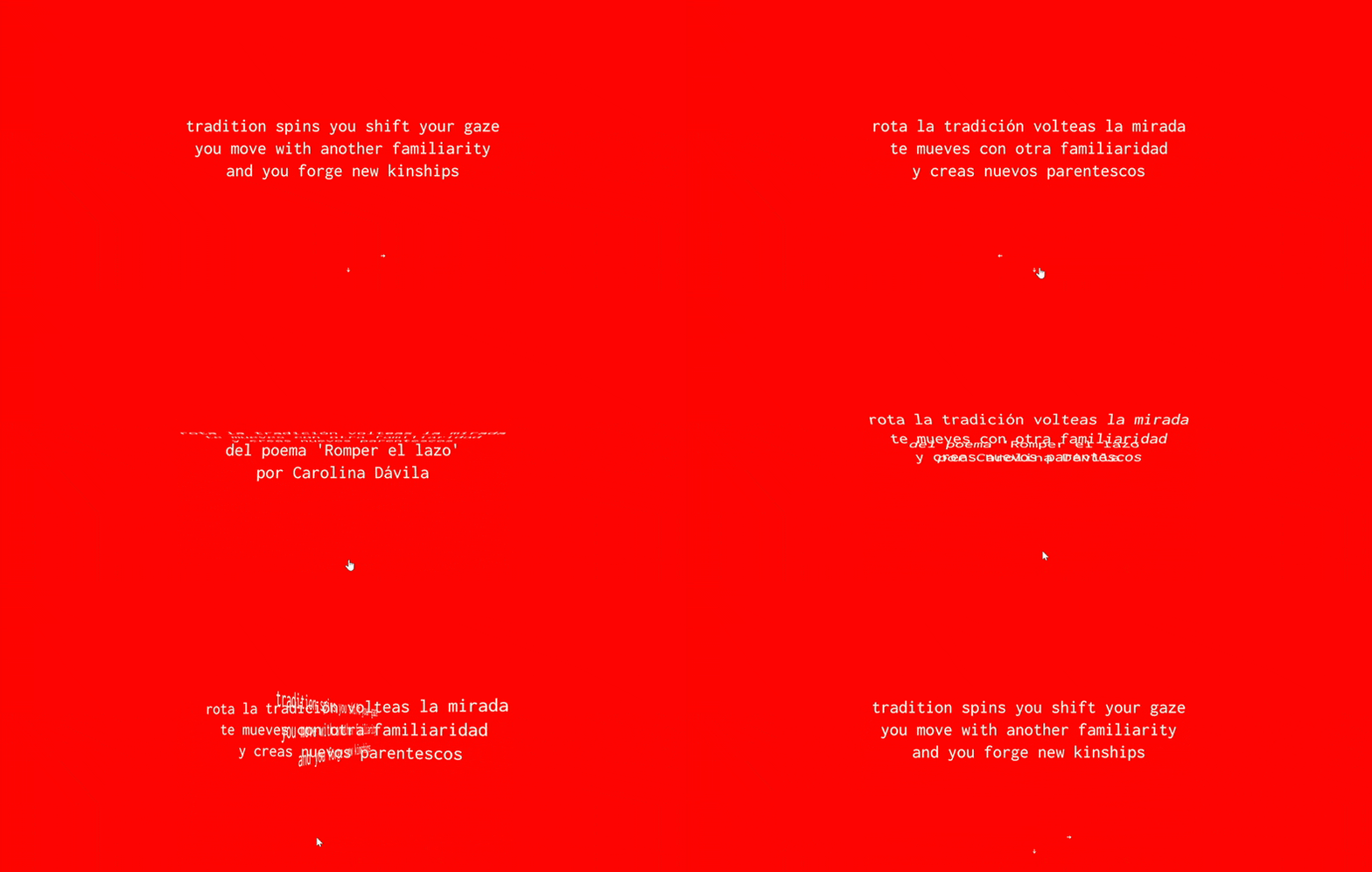
This transfluxion uses a verse from the opening poem in Carolina Dávila’s book animal ajena. I was interested in how to visualize bilingual text and paratext as coexisting on perpendicular planes requiring perspectival shifts to become visible/legible. The interactive transfluxion is available here (better on computer rather than phone), and the full poem is here.
…
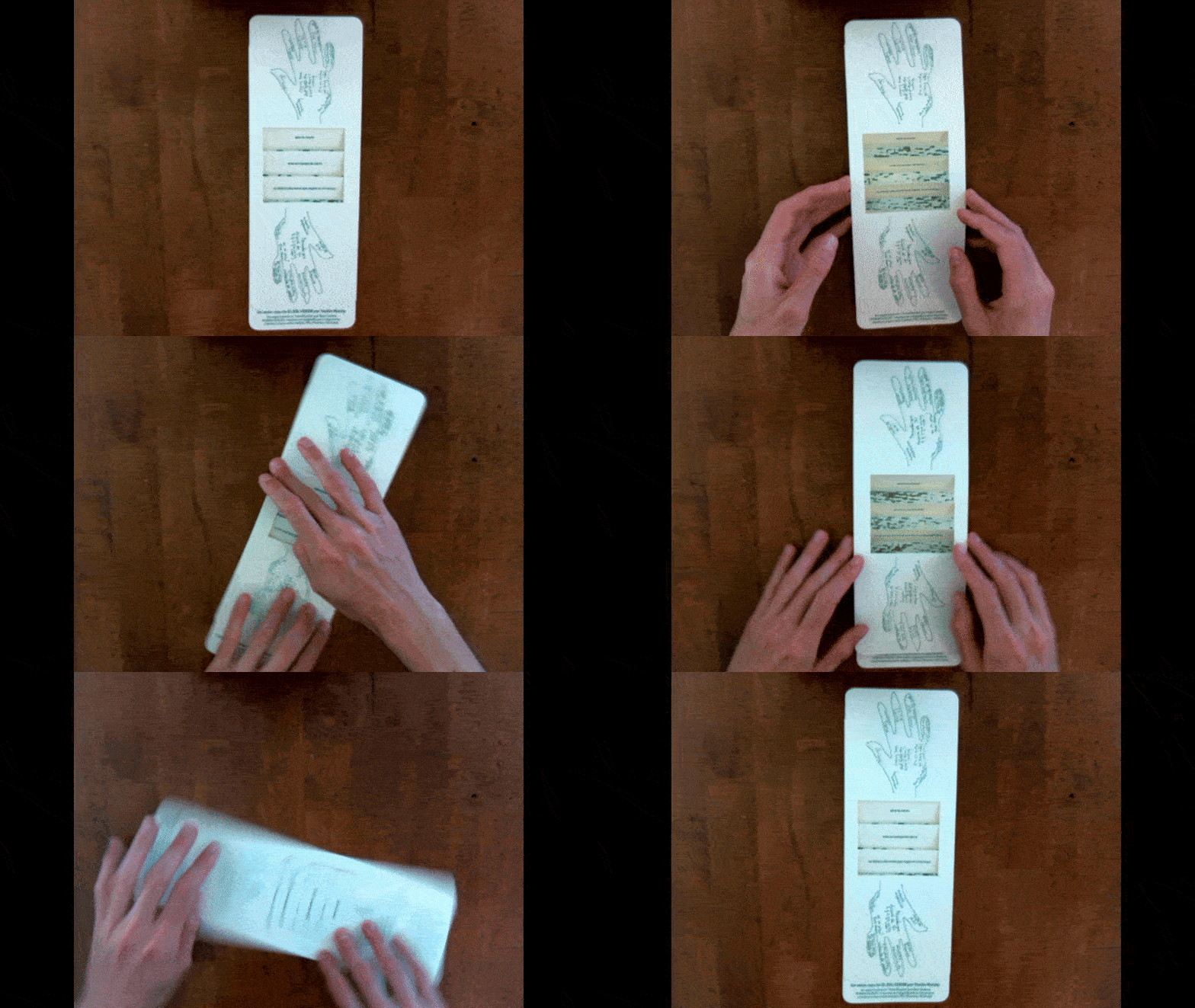
This physical transfluxion (using an excerpt from a book by Yaxkin Melchy) is an experiment in rotational language shifts called "Un verso-rayo de El sol verde // A verse-beam from The Green Sun." I designed, risograph printed, and hand-assembled it during a residency at La Impresora in Isabela, Puerto Rico in April 2025.
…
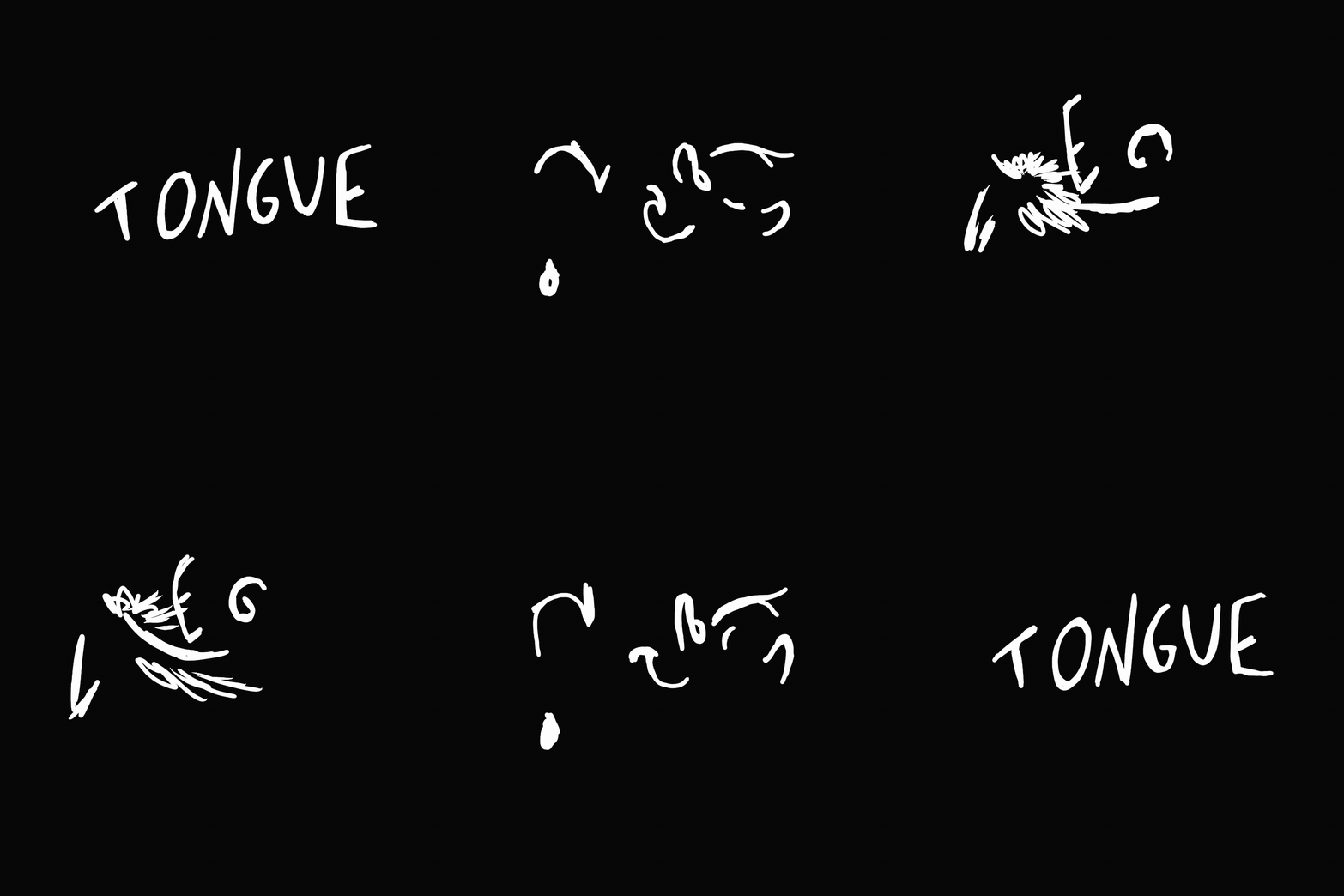
I’ve recently been experimenting with 2D animation as a way to visualize text switching back and forth between languages. Going forward, I’m interested in thinking about how etymology and syntax might inform the ways I morph and/or transpose letters, phonemes, and words in my “translanimations.”